Industrial Breather Vent Manufacturer — Junction Box Vent, Control Box Vent & Explosion Proof Enclosure Vent India
BREATHABLE
VENTS FOR
TELECOM &
INDUSTRIAL
IP68 rated ePTFE membrane breathable vents for junction boxes, electrical panels, control boxes, outdoor cabinets, 5G base station enclosures, and explosion-proof ATEX housings. Industrial breather vents that prevent moisture ingress from pressure cycling in sealed industrial enclosures — keeping electronics protected in the harshest environments. Direct manufacturer from Jamnagar, India.

THE BREATHING EFFECT
DRAWS IN MOISTURE
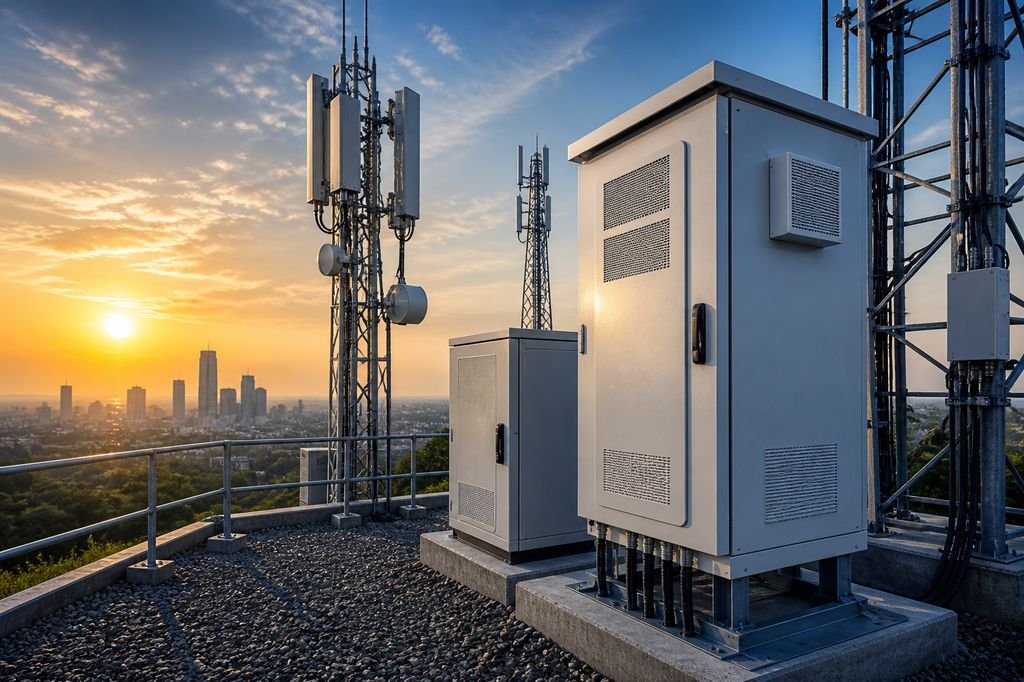
Outdoor telecom enclosures heat during the day under sun and active electronics, then cool at night. The cooling air contracts, creating negative pressure. Any small imperfection in seals draws humid air in. Over weeks, moisture accumulates — causing corrosion and RF degradation.
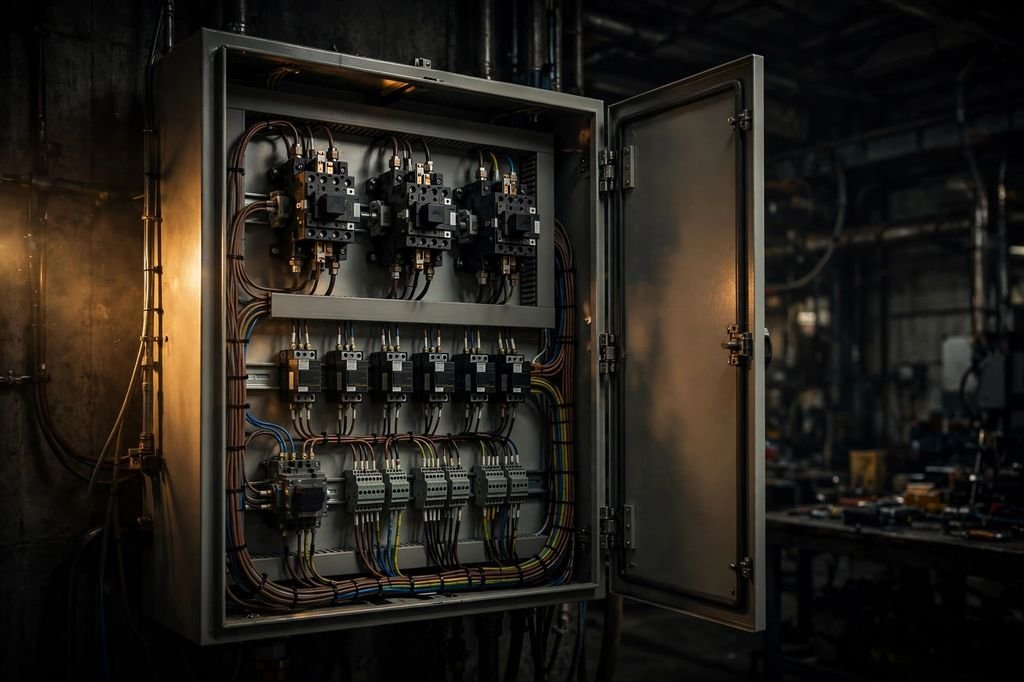
Industrial control panels near chemical processes, oil & gas facilities, and water treatment plants face corrosive gas, humidity, and chemical spray. Standard seals degrade; breathable vents with oleophobic ePTFE membrane physically block oils and chemicals.
Explosion-proof enclosures in Zone 1/2 and Zone 21/22 hazardous areas require vents with higher melting points and zero ignition risk. Brass outperforms plastic in all ATEX-relevant material properties — higher melting point, no static charge build-up.
Industrial and telecom equipment operates from Arctic cold storage (-40°C) to desert installations (+70°C ambient, up to +150°C enclosure surface). Precigenix vents are rated -40°C to +150°C — covering the full industrial operating range.
TELECOM & INDUSTRIAL
APPLICATIONS
Outdoor 5G RRU (Remote Radio Unit) and BBU (Baseband Unit) enclosures deployed on poles, towers, and rooftops — 24/7 outdoor operation with continuous thermal cycling.
Street-side telecom distribution cabinets, OLT and ONU enclosures, and outdoor networking equipment where sealed IP ratings must be maintained long-term.
Outdoor optical transport network (OTN) boxes, fiber splice closures, and joint enclosures buried or mounted outdoors — requiring sustained IP68 protection.
Outdoor and semi-outdoor industrial control panels, motor control centers (MCC), and automation enclosures in manufacturing, oil & gas, water treatment, and mining.
Ex-rated enclosures in Zone 1/2 hazardous areas — chemical plants, oil refineries, offshore platforms, and grain handling facilities requiring ATEX-compatible venting components.
Outdoor and washdown-environment PLC cabinets, SCADA terminal enclosures, and remote I/O boxes in process industries and infrastructure installations.
Pump station control panels, water treatment monitoring enclosures, and wastewater plant instrumentation in high-humidity, chemically aggressive outdoor environments.
Offshore and onshore oil and gas instrument enclosures, junction boxes, and control panels in salt fog, flammable gas, and extreme temperature environments.
Railway trackside equipment enclosures, signal control boxes, station monitoring electronics, and infrastructure control cabinets exposed to all weather conditions.
RECOMMENDED
VENT TYPES
Primary choice for 5G base station enclosures, outdoor telecom cabinets, and industrial control panels. High airflow (1200 ml/min), IP68 rated, European ePTFE membrane. Stainless steel coated for corrosion resistance.
For OTN boxes, fiber joint enclosures, and compact industrial instrument housings using M12×1.0 thread. Same European ePTFE performance, IP68 rated, suitable for corrosive environments.
For small sensor enclosures, IoT nodes, and compact instrument housings. M6 thread, European ePTFE membrane, IP68 rated. Space-efficient for compact PCB enclosures.
For OEM panel builders and enclosure manufacturers with specific thread sizes, body configurations, or performance requirements. Custom development with 24-hour feasibility response.
TELECOM & INDUSTRIAL
QUESTIONS
Why do outdoor telecom and 5G enclosures need breathable vents?
Outdoor telecom cabinets and 5G base station enclosures are sealed for IP protection but experience temperature changes that cause air inside to expand and contract — the "breathing effect." Without a breathable vent, this draws humid outside air past seals as the enclosure cools, leading to condensation on active electronics and RF components. A European ePTFE membrane vent equalizes pressure passively while physically blocking all moisture, dust, and contaminants.
Are Precigenix vents suitable for ATEX and explosion-proof enclosures?
Yes. Precigenix brass vents have passed explosive environment testing, making them suitable for ATEX-class hazardous area enclosures. The higher melting point of brass (vs plastic) is a key requirement for flame-proof enclosure specifications. The brass body with stainless steel coating also eliminates static charge build-up risk that non-conductive plastic vents can create.
Are the vents corrosion resistant for chemical and offshore environments?
Yes. Precigenix breathable vents feature a stainless steel coated brass body that provides corrosion resistance for chemical plant environments, offshore and coastal installations, and marine applications. The European ePTFE membrane is also oleophobic — repelling oils and chemical contaminants from the surface.
What is an industrial breather vent and which enclosures need one?
An industrial breather vent — also called a pressure relief vent or enclosure breather — is an ePTFE membrane vent that allows air pressure inside a sealed industrial enclosure to equalize with the atmosphere as it heats and cools. Enclosures that need industrial breather vents include electrical panels, control boxes, junction boxes, outdoor cabinets, motor terminal boxes, transformer housings, and instrument enclosures. Without a breather vent, daily thermal cycling creates repeated pressure stress on door seals and cable glands — causing premature IP degradation and moisture ingress. Precigenix industrial breather vents are IP68 rated and available in M6, M12×1.0, and M12×1.5 thread sizes.
Can breathable vents be used in IoT device housings and outdoor sensor enclosures?
Yes. IoT gateways, outdoor sensors, smart meters, CCTV camera housings, and environmental monitoring devices all use sealed housings that benefit from pressure equalization vents. Precigenix M6×0.75 micro-vents and adhesive ePTFE membrane patches are ideal for compact IoT enclosures — providing IP67/IP68 pressure equalization in a small footprint. The compact brass body fits tight housing geometries while the oleophobic membrane handles the dust, humidity, and temperature variation typical in outdoor IoT deployment environments.