Solar Junction Box Vent — IP68 Solar Enclosure Vent & Solar PV Vent Manufacturer India
BREATHABLE
VENTS FOR
SOLAR &
RENEWABLE
IP68 rated ePTFE membrane breathable vents for solar junction boxes, solar combiner boxes, solar inverters, BESS enclosures, and solar charge controllers. Designed for the daily thermal pressure cycling that damages solar enclosure seals — keeping moisture out and your IP rating intact across the 25-year lifetime of your solar installation. Solar PV vent manufacturer from India.

DAILY THERMAL CYCLES
DESTROY SEALS
Solar enclosures heat to 60–80°C under direct sun, then cool to ambient or below at night. Every day is a pressure cycle — sealed air expands, pushes past gaskets, draws humid outside air in as it cools. Over months, seals fail.
Humid air drawn into a solar junction box condenses on bypass diodes, connectors, and busbars. Moisture accelerates corrosion, increases resistance, and creates hot spots that reduce panel efficiency and trigger safety faults.
Rooftop solar in monsoon regions, ground-mount in coastal or offshore locations, and floating solar (FPV) installations face constant water, humidity, and salt spray — all requiring robust IP68 vent protection.
Battery Energy Storage Systems (BESS) and string inverters generate heat during operation and cool rapidly. Large enclosures move more air volume per cycle — demanding higher airflow breathable vent solutions.
SOLAR & RENEWABLE
APPLICATIONS
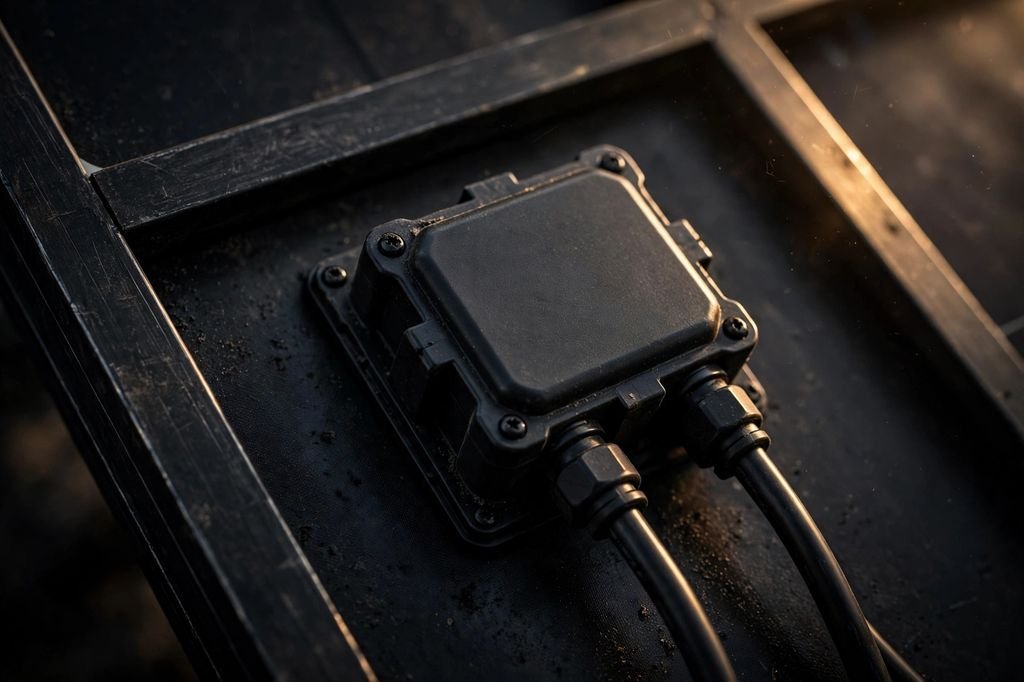
Panel-level junction boxes housing bypass diodes and connectors — daily thermal cycling outdoors demands reliable breathable venting to prevent moisture ingress and corrosion.
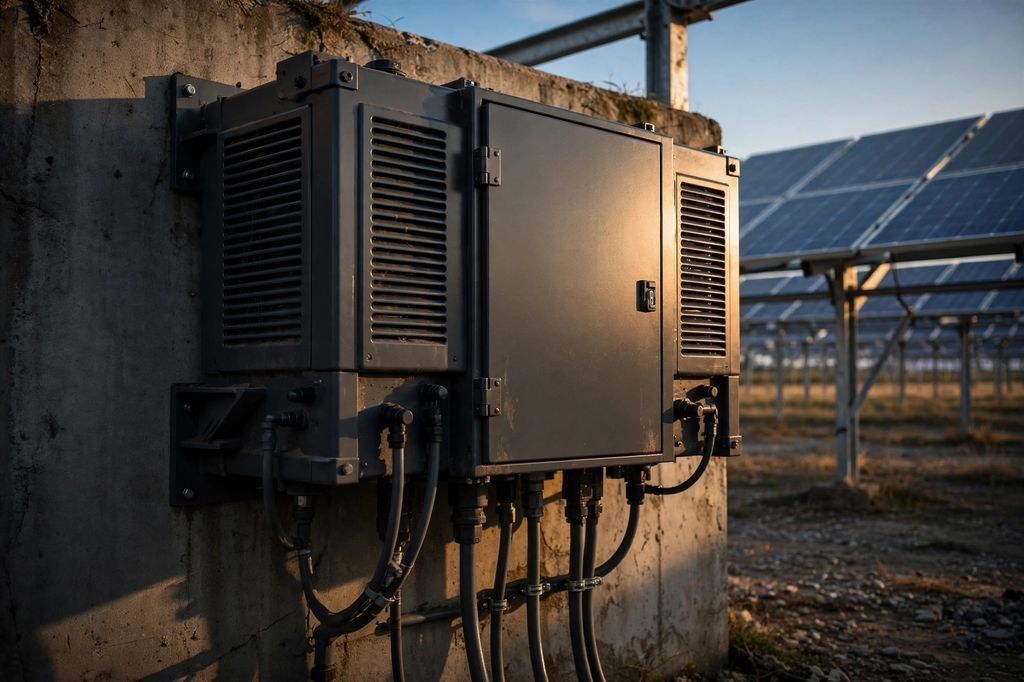
Outdoor string inverter enclosures on rooftop and ground-mount installations — heat generation from power electronics combined with outdoor exposure requires IP68 breathable vents.
DC combiner boxes aggregating multiple string inputs — outdoor mounted, often in harsh environments including deserts, coastal sites, and high-humidity tropical climates.
BESS module and container enclosures where battery cells cycle thermally during charge and discharge — breathable vents equalize pressure and prevent condensation on high-value battery modules.
MPPT and PWM solar charge controller housings in outdoor and semi-outdoor installations — protecting electronics from humidity and condensation while equalizing pressure.
Floating photovoltaic installations on reservoirs, lakes, and coastal water bodies — elevated humidity, splash, and temperature cycling demand the highest IP rated breathable vents.
Offshore wind turbine control enclosures, substation junction boxes, and wind farm monitoring equipment — marine salt fog, extreme humidity, and mechanical vibration environments.
Weather monitoring stations, irradiance sensors, and solar plant SCADA equipment installed outdoors in utility-scale solar parks — sealed enclosures with long maintenance intervals.
Module-level micro-inverters and grid-tie inverter enclosures installed directly on or near solar panels — exposed to full outdoor weather conditions with minimal maintenance access.
RECOMMENDED
VENT TYPES
Primary choice for string inverters, combiner boxes, and BESS enclosures. High airflow (1200 ml/min), IP68 rated, UV resistant, European ePTFE membrane. IK10 rated for physical handling during installation.
For solar charge controllers, monitoring systems, and compact solar enclosures using M12×1.0 thread. UV resistant, IP68 rated, European ePTFE membrane. Corrosion resistant for coastal and offshore use.
For solar panel junction box internal venting where screw-in mounting is not possible. European ePTFE oleophobic membrane, customisable size, applied directly inside the junction box cover.
For OEM solar manufacturers requiring specific thread sizes, body dimensions, or performance specifications. Feasibility assessment and custom development available — respond within 24 hours.
SOLAR VENT
QUESTIONS
Why do solar junction boxes and inverters need breathable vents?
Solar enclosures are installed outdoors and experience large daily temperature swings — heating under direct sunlight, cooling at night. This thermal cycling causes the air inside sealed enclosures to repeatedly expand and contract, creating pressure cycles that eventually force humid air past seals. Without a breathable vent, moisture enters and causes condensation on electrical connections. A European ePTFE membrane vent allows pressure to equalize passively while physically blocking water, dust, and contamination.
Are Precigenix vents suitable for outdoor solar and coastal installations?
Yes. Precigenix breathable brass vents are IP68 tested (continuous submersion), UV resistant, and rated from -40°C to +150°C. The brass body with stainless steel coating provides corrosion resistance for coastal, marine, and high-humidity environments. They are suitable for rooftop solar, ground-mount, floating solar (FPV), and offshore renewable energy installations.
What type of breathable vent is used inside solar panel junction boxes?
Adhesive membrane vents with European ePTFE membrane are most commonly used inside solar junction boxes, applied directly to the inner wall of the junction box cover. For external venting on inverter and combiner box enclosures, screw-in M12×1.5 or M12×1.0 brass vents are standard.
What IP rating do solar junction box breathable vents need?
Solar junction boxes typically require IP67 minimum, with IP68 recommended for ground-mount, floating, and coastal installations where submersion risk exists. Precigenix solar enclosure vents are tested to IP68 — continuous submersion — ensuring the junction box retains its IP rating over a 25-year field lifetime. UV resistance and -40°C to +150°C thermal range are also verified, matching the full outdoor solar operating envelope.
Does the solar combiner box need a pressure equalization vent?
Yes. Solar combiner boxes aggregate multiple DC string inputs and are typically installed outdoors in direct sun exposure. The enclosure experiences daily thermal cycling between approximately 20°C at night and 70°C+ during peak sun — a 50°C+ swing that significantly stresses enclosure seals. A pressure equalization vent with ePTFE membrane allows this thermal breathing to occur without moisture ingress, protecting bus bars, fuses, and blocking diodes inside the combiner from condensation and corrosion-related failure.