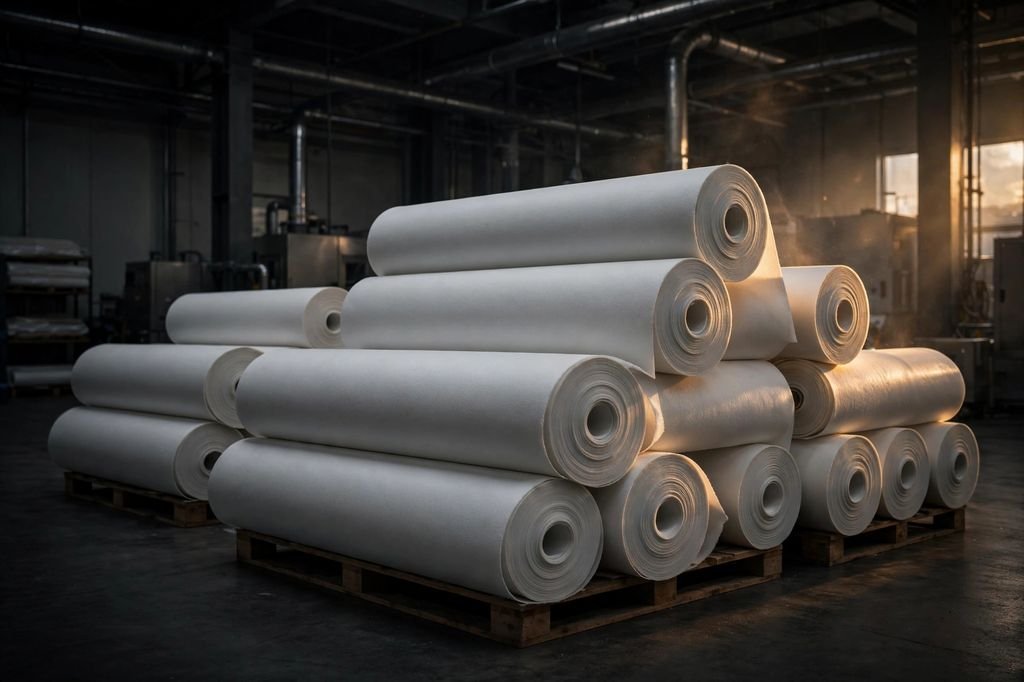
Technical Guide — Membrane Technology
PTFE vs ePTFE Membrane Vent — What is the Difference?
When specifying a breathable vent, you will encounter both terms — PTFE vent and ePTFE membrane vent. These are often used interchangeably in the market, but they describe two fundamentally different materials. Understanding the difference matters for selecting the correct product and interpreting supplier claims correctly.
What is PTFE?
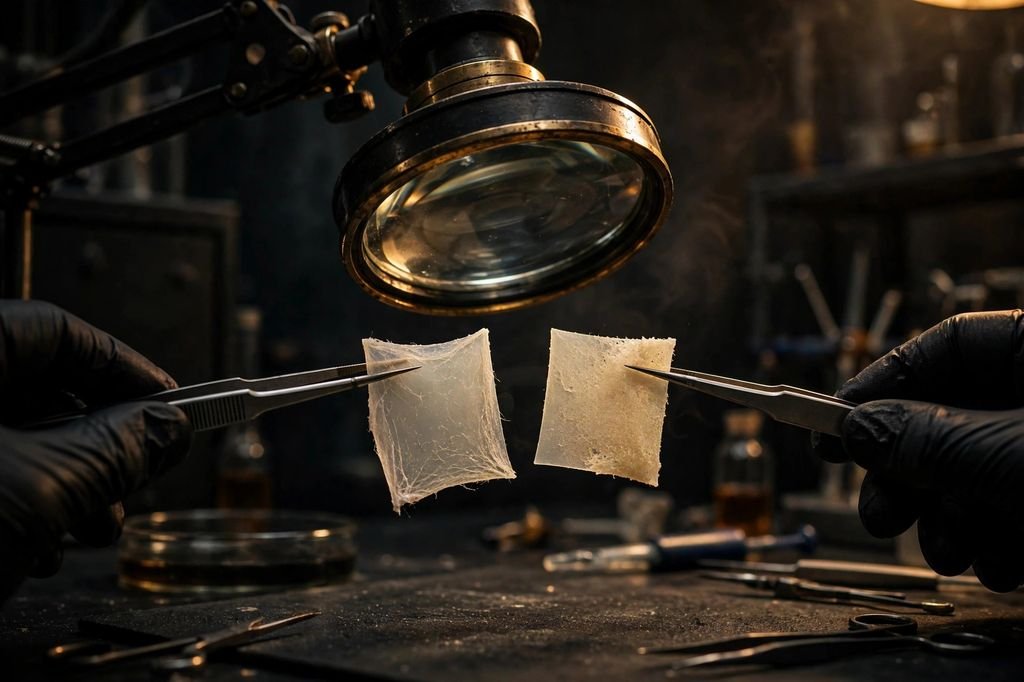
PTFE — polytetrafluoroethylene — is a synthetic fluoropolymer with exceptional chemical resistance, low friction, and high melting point. In its standard solid form, PTFE is a dense, opaque white material that is completely impermeable to liquids and gases. It is used in seals, gaskets, electrical insulation, and non-stick coatings — but solid PTFE cannot be used as a breathable membrane because air cannot pass through it.
What is ePTFE?
ePTFE — expanded PTFE — is created by stretching PTFE material under controlled conditions of temperature and speed during manufacturing. This expansion process creates a permanent microporous node-and-fibril structure throughout the material. The result is a membrane that looks different from solid PTFE: it is semi-transparent, highly flexible, and contains approximately 1.4 billion pores per cm².
Each pore in ePTFE membrane is approximately 0.2 microns in diameter. This pore size is:
- Larger than air molecules (~0.0003 microns) → air passes through freely
- Larger than water vapour molecules (~0.0004 microns) → vapour passes through freely
- Much smaller than the smallest liquid water droplet (~100 microns) → water is blocked
- Much smaller than fine dust particles (~1–10 microns) → dust is blocked
PTFE vs ePTFE — Key Differences for Breathable Vents
| Property | Solid PTFE | ePTFE Membrane |
|---|---|---|
| Structure | Dense, solid, non-porous | Microporous, node-and-fibril |
| Air permeability | Zero — impermeable | High — 1,600 ml/min/cm² at 70 mbar |
| Water blocking | N/A (impermeable both ways) | Blocks liquid water to IP68 |
| Vapour transmission | Zero | High — allows condensation escape |
| Use in breathable vents | Cannot be used | Standard membrane material |
| Oleophobic treatment | Not applicable | Available — repels oils and chemicals |
| Typical thickness | Varies (mm range) | 0.1–0.3mm |
What is an Oleophobic ePTFE Membrane?
Standard ePTFE membranes are hydrophobic — they repel water. However, oils, greases, and surfactants can wet standard ePTFE membranes and gradually block the micropores — reducing airflow and degrading breathability over time.
An oleophobic ePTFE membrane has an additional fluoropolymer surface treatment that makes it repel oils as well as water. Oleophobic vents maintain their airflow performance in environments with:
- Engine oil mist (automotive underbonnet applications)
- Electrolyte vapour (EV battery enclosures)
- Hydraulic fluid and lubricants (industrial environments)
- Cleaning chemicals and solvents (maintenance environments)
Precigenix uses oleophobic ePTFE membrane as standard across all product variants — not only hydrophobic — to ensure long-term performance in the demanding environments where breathable vents are most needed.
Which One Should You Specify?
Always specify ePTFE membrane vent when sourcing breathable vents. If a supplier quotes you a "PTFE vent" without specifying ePTFE, ask for clarification — ensure it is an expanded PTFE membrane, not a solid PTFE body component being described.
Additionally, specify oleophobic ePTFE for automotive, EV, and industrial applications. For clean indoor electronics, standard hydrophobic ePTFE is sufficient.
Oleophobic ePTFE Membrane Vents — Direct from India
Precigenix manufactures oleophobic ePTFE membrane breathable vents — screw-in M6/M12 and adhesive types — tested to IP68, rated IK10. Competitive pricing with 3–7 day delivery from Jamnagar, India.
Request Datasheet & Quote →